
Checking Calhoun County Criminal History
Start by deciding whether the sought record concerns a court case, an arrest, custody, or a reported statewide outcome. Calhoun County has no single complete criminal-history screen. County Court at Law No. 1 links Tyler Odyssey for Class A and B misdemeanor cases. Felony dockets and files belong with the District Clerk. Municipal and justice courts keep their own fine-only cases. A recent booking begins with the arresting agency and Adult Detention Center, while the Texas Department of Public Safety maintains the statewide Computerized Criminal History system.
Gather the person’s full legal name, spelling variants, approximate age or date of birth when lawfully available, and a date range. A case number, report number, or booking number is far more precise than a name. Compare the court, charge, file date, and other lawful identifiers before treating a hit as the right person. Only fingerprints positively associate a person with a Texas DPS record.
If an online search fails, move to the custodian’s counter or written-request channel. Older Calhoun County files may not be digitized, and a current booking may not yet have a filed court case. A narrow request should name the existing document, event date, location, agency, and known identifier. Ask for electronic delivery when practical and request a cost estimate before charges pass a chosen limit. This approach gives staff enough detail to locate the record without asking them to create a new report or answer an open-ended question.
- Use Calhoun’s Odyssey instructions for County Court at Law misdemeanors, or the District Clerk docket for felonies.
- Check the correct municipal court or one of five justice precincts for fine-only cases and warrants.
- For a recent arrest, identify the arresting agency and ask the jail for the booking record.
- Compare the filed charge and disposition with the original booking accusation.
- Order a certified disposition from the clerk or use FAST fingerprints for an accurate review of one’s own Texas CCH.
Calhoun County Odyssey Searches
County Court at Law No. 1 publishes a useful local search rule: enter the name as Last Name, First Name and add an asterisk to the end of a partial name. That small detail can find spelling variants without claiming that every result is the same person. The portal covers criminal and civil records within its stated county-court scope. It does not replace the District Clerk’s felony docket, municipal dockets, or justice-court files.
| Field | Use | Calhoun detail |
|---|---|---|
| Last Name | Name search | Add * at the end for a partial name |
| First Name | Narrow results | Use after the last name |
| Case Number | Direct match | Format is not published on the landing page |
| Search | Run query | Review court and case details before relying on a match |
The official County Court at Law page supplies the Odyssey directions. A clerk-issued certified copy remains the authoritative form when proof of a disposition is needed.
Search the other local court layers when Odyssey does not answer the question. Port Lavaca and Seadrift municipal courts handle their own city Class C and ordinance matters. Five Calhoun County justice precincts keep separate fine-only dockets. A felony belongs with the District Clerk even when the arrest began inside a city. Recording the court and case number from each useful result prevents a name-only hit from being mistaken for a countywide record.
Texas Official Background Checks
The Texas DPS Criminal History Conviction Name Search is the official public name product. It reports Texas convictions and deferred adjudications submitted to DPS, not the complete nonpublic CCH. Each opened record uses a $1 search credit. A no-match search also consumes a credit, and card purchases add the published processing charges. Soundex can help with similar-sounding names, but a name and birth date remain a probable match rather than fingerprint proof.
For self-review, DPS directs applicants to FAST fingerprint capture through IdentoGO by IDEMIA. Research recorded a $15 DPS personal review plus a $10 FAST capture fee, subject to confirmation at scheduling. The FBI’s subject-only Identity History Summary is a separate federal fingerprint product. Neither product substitutes for a Calhoun court file when the question concerns motions, pending charges, or a certified local judgment.
The DPS search-credit explanation shows how previews, matching, and debits work.

This official screen reinforces why a paid name result is narrower than a full fingerprint-based personal review.
Calhoun County Records Counters
Three offices share the courthouse address at 211 South Ann Street, yet they perform different jobs. District Clerk Teresa Garcia keeps felony files for the 24th, 135th, and 267th Judicial District Courts. County Clerk functions support County Court at Law No. 1 misdemeanor matters. Criminal District Attorney Sara M. Rodriguez reviews referrals and prosecutes cases, but the DA is not the routine certified-copy counter.
District Clerk
211 S. Ann St., Port Lavaca, TX 77979
361-553-4630
Open 8 a.m. to 4:30 p.m.
County Court at Law
211 S. Ann St., Port Lavaca, TX 77979
361-553-4640
Class A and B misdemeanor court
Adult Detention Center
302 W. Live Oak St., Port Lavaca, TX 77979
Booking and county custody records
The Calhoun County courts directory displays the local court offices and links.

The directory helps route a file request before a trip to the shared courthouse.
Criminal Record Types
Each Calhoun County criminal record follows the event that created it. Police and deputies write incident and arrest reports. Jail staff create the booking record. Prosecutors choose the filed charge, and the clerk preserves the case file. DPS standardizes qualifying arrest cycles and later outcomes in the statewide CCH. TDCJ becomes the custodian after a state-prison commitment, while local or state supervision offices hold operational probation and parole material.
- Arrest and booking records: initial accusation, intake, bond, custody, and release data.
- Court case files: filed charges, events, pleas, rulings, judgment, and sentence.
- DPS CCH entries: reported statewide cycles, with a narrower public web subset.
- Warrant records: court-issued authority that may appear in a docket, though operational systems are not public.
- Supervision and registry records: court orders, TDCJ status, and public Chapter 62 information within legal limits.
Calhoun Booking Records Flow
After a reportable Class B or more serious arrest, jail staff take fingerprints and create a tracking-control number. The arrest cycle goes to DPS. A prosecutor may accept, change, or reject the accusation, and the clerk reports later court events and the final disposition. The chain is best read as: incident or arrest report → jail booking → prosecutor decision → filed court case → DPS disposition update.
A county procurement record described the Adult Detention Center as a 144-bed facility with a historical average daily population of 76 in 2023. Those figures are context, not a live head count. No current official Calhoun booking blotter or online roster was verified. Readers should contact the Sheriff or jail, request the booking sheet, and then follow any filed charge to the correct clerk.
The county law-enforcement directory identifies the sheriff, jail, constables, and supervision offices.

This county page is the verified starting point when no public jail roster is available.
Inside a Calhoun Criminal Record
A record’s fields depend on its custodian. A Texas CCH is organized by identity and arrest cycle. A Calhoun court file is organized by case number and docket events. The jail entry focuses on intake and custody. Treat aliases, dates, and descriptive data as matching aids. An offense label at booking is not the same as the charge filed by the prosecutor, and neither proves a conviction without the disposition.
| Name & Identifiers | Legal name, aliases, birth data, SID or FBI number, and fingerprints where authorized. |
|---|---|
| Arrest / Booking Data | Agency, date, booking number, accusation, bond, release, and tracking-control number. |
| Charges & Statutes | Offense description, code, degree, and the prosecutor’s filed instrument. |
| Disposition | Dismissal, acquittal, deferred adjudication, conviction, or another court outcome. |
| Sentence | Fine, confinement, community supervision, restitution, or other terms. |
| Custody / Supervision Status | County custody, TDCJ placement, projected dates, or court-ordered supervision. |
Calhoun DPS Search Limits
A $1 public DPS search is not a full rap sheet. It emphasizes reported Texas convictions and deferred adjudications. It may omit a pending Calhoun case, a dismissal, a low-level event below reporting rules, an out-of-state matter, or a disposition that has not reached DPS. Conversely, a clerk docket can show filings and hearings but does not compile a person’s statewide history.
| Channel | Best for | Key limit |
|---|---|---|
| Calhoun clerk | Filed case and certified disposition | One court system, not statewide history |
| Jail or arresting agency | Recent booking and incident report | Initial accusation may change |
| DPS name search | Public reported Texas outcomes | Name match is not fingerprint proof |
| FAST personal review | One’s own Texas CCH | Requires fingerprints and official process |
The re:SearchTX court interface supplies a separate statewide court-access layer where participating clerks provide coverage.
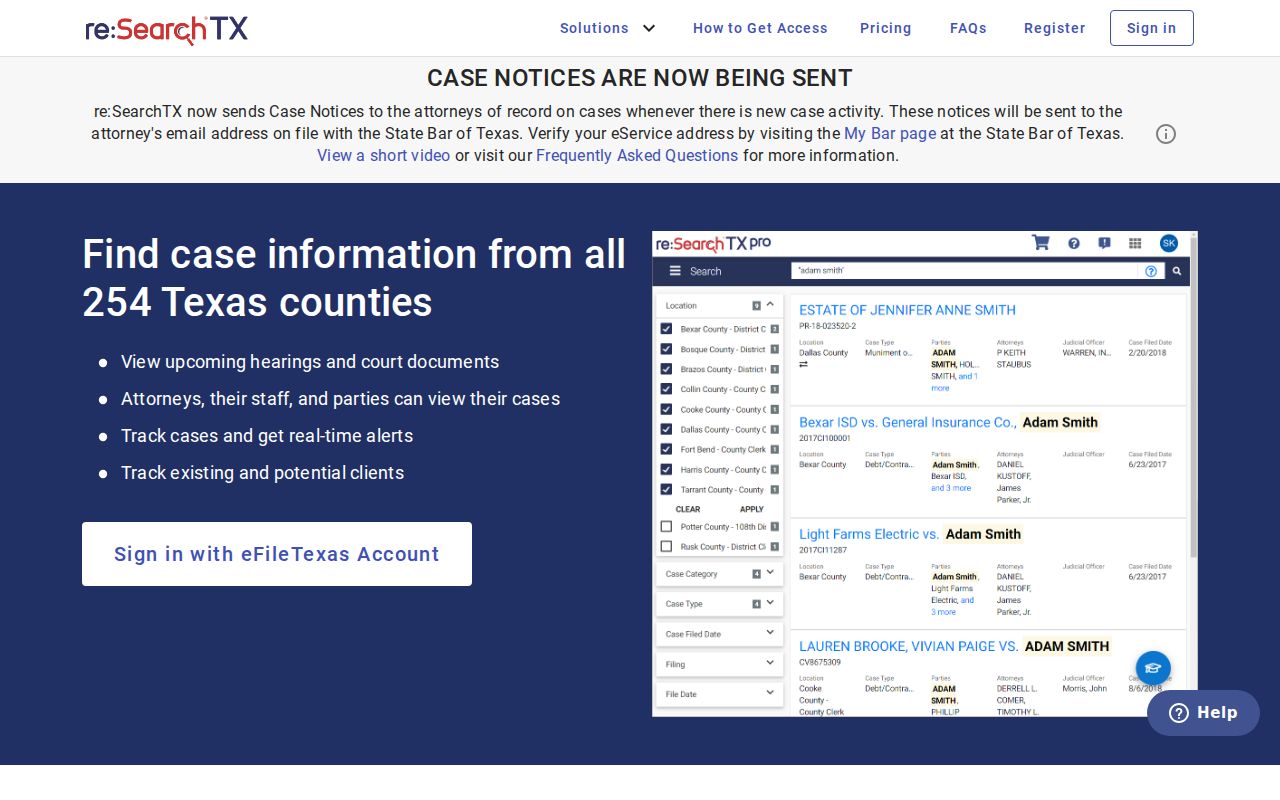
Its coverage and document access can vary by clerk, so Calhoun’s own clerk remains the certification source.
Texas Public Access Laws
The Texas Public Information Act applies to existing records held by government bodies, with exceptions for protected matter. Filed case records follow court access law and procedure rather than the ordinary TPIA route. Ask the agency for a defined document and date range, not an answer to a question. Active investigations, juvenile information, victim identities, driver data, and other confidential fields may be withheld or redacted.
Key Statutes:
Government Code Chapter 552 gives the public access to releasable government records and sets response procedures.
Government Code Section 411.135 authorizes public access to specified DPS conviction and deferred-adjudication data.
Code of Criminal Procedure Chapter 66 governs criminal-history reporting from arrest through disposition.
Code of Criminal Procedure Chapter 55A sets the current Texas expunction framework.
Calhoun Courthouse Record Visits
The District Clerk now closes at 4:30 p.m., a change effective May 1, 2026. The office does not accept pleadings by fax or email. Ordinary courtroom visitors may not bring phones, laptops, wireless devices, handbags, or backpacks into the courtroom. Recording, broadcasting, photography, and television anywhere in the courthouse require permission from the presiding judge. These rules matter when a reader plans to inspect a file or retain notes.
The District Clerk’s official page carries the current counter details, calendars, docket links, and courthouse restrictions.

Check that office page shortly before visiting because closures and filing notices can change.
Sealed, Expunged, and Restricted Records
Texas expunction and nondisclosure have different effects. Chapter 55A expunction is limited to qualifying statutory categories and can direct named custodians to remove, destroy, or return covered records. An order of nondisclosure restricts ordinary public release for eligible cases but leaves access for many authorized agencies. A dismissal alone does not erase the arrest, jail entry, docket, and DPS cycle.
Calhoun’s path begins with certified charging instruments and dispositions from the District Clerk or County Clerk. The petition must account for every charge in the arrest episode and identify the agencies holding records. Exact county filing and service fees were not verified in the research, so confirm them with the clerk before filing. Juvenile files, victim-identifying information, protected personal data, and some active-investigation material also face separate restrictions.
The current Texas expunction chapter provides the controlling eligibility and procedure.
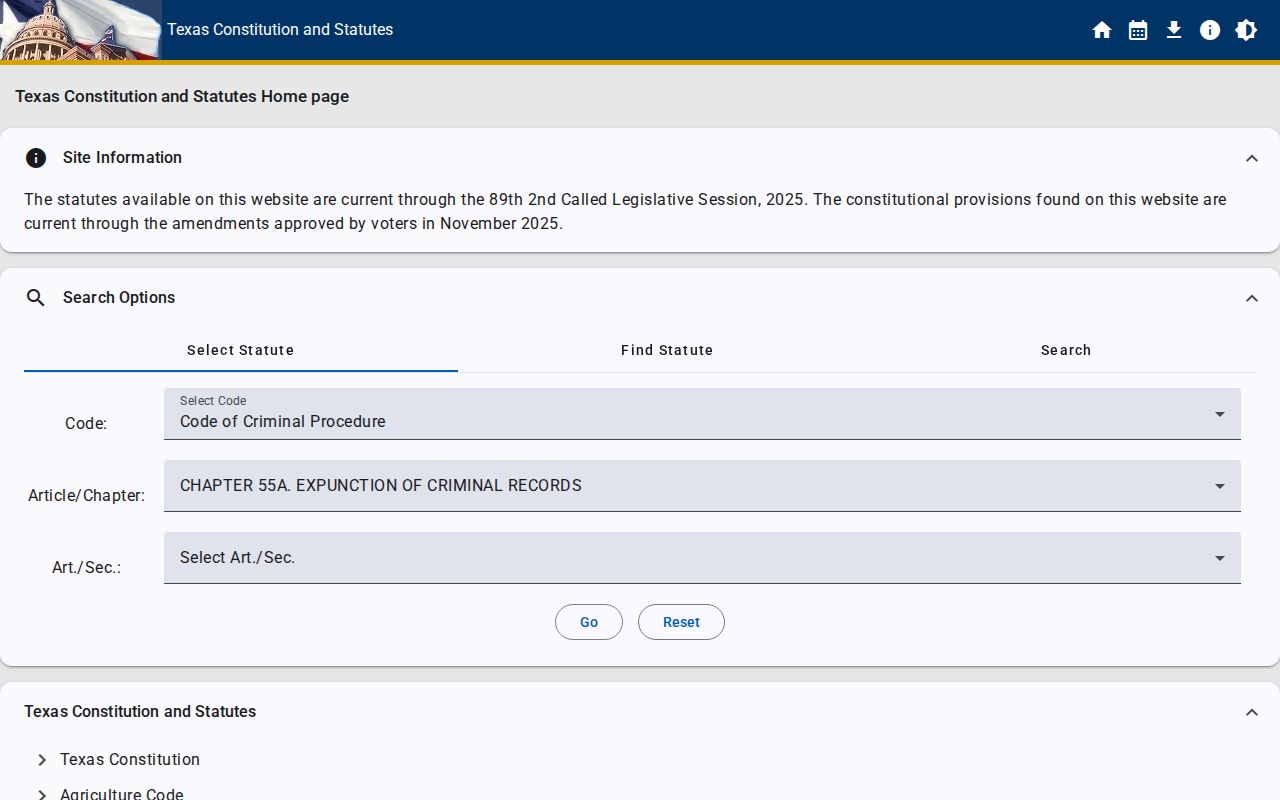
The statute should be read against the exact arrest outcome rather than treated as automatic relief.
When an order has already issued but information remains visible, identify the source before seeking a correction. A county docket, DPS CCH entry, jail file, and registry record each has a different custodian. DPS directs a person with a missing disposition to obtain the certified Calhoun County disposition and use its Criminal History Error Resolution process. One order may cover only the arrest episode named in it, so unrelated cases require separate review.
Calhoun County Warrant Checks
No verified public countywide warrant portal was found, and Texas does not provide a public statewide TCIC name search. Check the court that could have issued the warrant: District Clerk for felony capias activity, County Court at Law and Odyssey for misdemeanors, Port Lavaca or Seadrift Municipal Court for city cases, and the correct justice precinct for its docket. A narrow Sheriff records request may seek releasable warrant material, but it cannot guarantee live clearance.
Port Lavaca Municipal Court warns that a phone call does not count as an appearance. Paying online or by phone is a no-contest plea that becomes a guilty judgment and is reported to DPS on the driving record. A person checking status should confirm the case number, charge, warrant type, bond or amount, and accepted appearance method with the issuing court before taking action.
Note: Sealed warrants and operational TCIC or NCIC information are not ordinary public records.
Calhoun Custody Search Layers
Custody location changes which locator works. The Calhoun Adult Detention Center holds pretrial detainees, short local sentences, and people awaiting transfer. The TDCJ Online Inmate Search covers state prisoners and related sentence data. The Bureau of Prisons locator is for federal custody. VINELink can add custody-status notifications when a participating record appears, but it is not a court disposition source.
When a person no longer appears at the county jail, check the court judgment first. Then search TDCJ by name, TDCJ number, or SID number if a state commitment occurred. A projected release date or parole eligibility date can change and does not promise release. Community supervision, the Texas term often called probation, remains distinct from parole after state imprisonment.
Calhoun County Criminal Records by City
Calhoun County has three incorporated places in the 2020 Census. Port Lavaca has the county’s largest municipal records desk and court. Seadrift maintains a police department and Justice Center but no verified online police or municipal-case portal. Point Comfort has no current official municipal records channel verified in the research, so requests must begin with the agency named on the report. Local arrest records can still lead to the county jail and county courts.
Port Lavaca Criminal Records
11,557 · Police Records Division and Municipal Court
Seadrift Criminal Records
1,240 · Police and municipal records through the Justice Center
Point Comfort Criminal Records
593 · Agency-first routing where no city portal is verified